Thursday, April 11, 2013
It's All About Cooties
Tazria-Metzora
3 Iyar 5773 / April 12-13, 2013
In this week's double portion, we learn that Judaism is really all about a fear of cooties. Last week we learned about which things we can eat and which we can't, with the can't column largely encompassing those creatures that eat the waste of other creatures and/or are creepy crawlers. This week the focus is on those who have skin afflictions and how the community is meant to deal with such outbreaks. For example, it's perfectly logical that if you had a rash you'd go to see a priest (you'll love him Ma - he's a priest AND a doctor!). Similarly, clothing and even homes were subject to such scrutiny. For those found to be "unclean," a process existed (often including isolation for a week) to earn back your "clean" status.
We learn later in the Torah that as punishment for speaking out against her brother Moses, Miriam is stricken with a skin disease requiring her to be separated out from the nation for a period of time. We are taught her external affliction was the result of an internal spiritual imperfection.
It seems obvious to note that when one is struggling internally, it's not challenging for others to notice based on the person's external attitude, actions and appearance. We might like to think we have awesome poker faces, but most of us don't. Like Miriam, how we appear to the outside world is often the result of what we're dealing with internally. And how blessed are we that our tradition recognizes the value in taking the time to be alone - to remove ourselves - in order to work on our internal issues when necessary, so that we can be the "cleanest" version of our selves as we walk through the world.
This Shabbat, set aside a bit of time to be alone. What kinds of internal issues are you looking to work on? What kinds of cooties are finding safe harbor in your life that you'd like to be rid of? What sorts of rituals do you utilize to symbolize letting go of the things dragging you down? In addressing these questions, recognize that the process of doing so is an inherently Jewish one, and can be traced all the way back to this week's double portion.


Friday, April 5, 2013
The Sound of Silence
Shemini
26 Nissan 5773 / April 5-6, 2013
In this week's portion, Shemini, we find Aaron and his sons concluding their weeklong celebration anointing them as the nation's priests. As we read this week, their first day on the job was anything but smooth. Two of Aaron's sons, Nadav and Avihu, are killed by Divine strike-down for lighting "alien fire." The rabbis struggle with what exactly their sin was, with many suggesting that they attempted to do their job while drunk. Aaron, when hearing the news of their deaths, remains silent, and is instructed to not mourn their loss publicly.
Considering that Aaron has been Moses's spokesperson since they first approached Pharaoh in Egypt, it's quite powerful to learn of Aaron's silence. Perhaps he was in shock? Perhaps he was giving his brother (and God) the silent treatment? It seems a lot to ask a father not to grieve...
Later in the portion, we find Aaron's other sons Elazar and Itamar making a mistake as it relates to where they eat the special sacrificial portion dedicated for the priests. Moses confronts and chastises them.
I can't help but feel for Aaron in this situation. Your brother is a pretty big deal - the prophet credited with leading the nation out of bondage in Egypt. You're in a new job as the High Priest of the nation. And yet, you have no control over anything going on. Two of your sons are killed due to their ticking God off. The other two are now chastised by your brother for improper conduct. All of this takes place despite your supposed leadership role in overseeing your sons, the priests, and all of this takes place your first real day on the job.
It seems palatable that perhaps Aaron was so overwhelmed and out of his element that shutting down to the outside world and remaining silent was really the only way he could handle the situation without resorting to destructive behavior. We find no open rebellion or complaint by him at all. I have to imagine, however, that whatever excitement or zeal he my have initially brought to his duties, that they were significantly tempered. How could he possibly remain excited to continue in a job he obviously had suffered such initial setbacks in? It leads me to wonder: what is the true power of the human spirit?
Many of us encounter situations where we don't really know what to say or how to respond, such as the death of a friend's parent, witnessing a terrible car crash, or being humiliated at work by a boss. What we can and should learn from Aaron is that our tradition makes space for silence, and at times, even encourages it.
There are definitely times when we, as people, determine that remaining silent seems a much better choice than trying to respond in some way (or trying to figure out how to respond) to a situation, and there are also times when we shut down and are unable to respond out of shock. And it's okay. Really.
Aaron, the spokesman for our nation, remained silent. I promise you that when appropriate, we have the permission to do so as well.
This Shabbat, make the time to listen. Resist the urge to immediately respond verbally to the situations you encounter. Recognize that sometimes silence is indeed golden, and that saying nothing is often better than saying anything at all.
26 Nissan 5773 / April 5-6, 2013
In this week's portion, Shemini, we find Aaron and his sons concluding their weeklong celebration anointing them as the nation's priests. As we read this week, their first day on the job was anything but smooth. Two of Aaron's sons, Nadav and Avihu, are killed by Divine strike-down for lighting "alien fire." The rabbis struggle with what exactly their sin was, with many suggesting that they attempted to do their job while drunk. Aaron, when hearing the news of their deaths, remains silent, and is instructed to not mourn their loss publicly.
Considering that Aaron has been Moses's spokesperson since they first approached Pharaoh in Egypt, it's quite powerful to learn of Aaron's silence. Perhaps he was in shock? Perhaps he was giving his brother (and God) the silent treatment? It seems a lot to ask a father not to grieve...
Later in the portion, we find Aaron's other sons Elazar and Itamar making a mistake as it relates to where they eat the special sacrificial portion dedicated for the priests. Moses confronts and chastises them.
I can't help but feel for Aaron in this situation. Your brother is a pretty big deal - the prophet credited with leading the nation out of bondage in Egypt. You're in a new job as the High Priest of the nation. And yet, you have no control over anything going on. Two of your sons are killed due to their ticking God off. The other two are now chastised by your brother for improper conduct. All of this takes place despite your supposed leadership role in overseeing your sons, the priests, and all of this takes place your first real day on the job.
It seems palatable that perhaps Aaron was so overwhelmed and out of his element that shutting down to the outside world and remaining silent was really the only way he could handle the situation without resorting to destructive behavior. We find no open rebellion or complaint by him at all. I have to imagine, however, that whatever excitement or zeal he my have initially brought to his duties, that they were significantly tempered. How could he possibly remain excited to continue in a job he obviously had suffered such initial setbacks in? It leads me to wonder: what is the true power of the human spirit?
Many of us encounter situations where we don't really know what to say or how to respond, such as the death of a friend's parent, witnessing a terrible car crash, or being humiliated at work by a boss. What we can and should learn from Aaron is that our tradition makes space for silence, and at times, even encourages it.
There are definitely times when we, as people, determine that remaining silent seems a much better choice than trying to respond in some way (or trying to figure out how to respond) to a situation, and there are also times when we shut down and are unable to respond out of shock. And it's okay. Really.
Aaron, the spokesman for our nation, remained silent. I promise you that when appropriate, we have the permission to do so as well.
This Shabbat, make the time to listen. Resist the urge to immediately respond verbally to the situations you encounter. Recognize that sometimes silence is indeed golden, and that saying nothing is often better than saying anything at all.
Friday, March 29, 2013
Trix Are For Kids
Shabbat Chol Hamoed
Pesach
19 Nissan 5773 / March
29-30, 2013
Some Passover Reflections:
Did you know that there was actually debate originally by
the ancient rabbis over whether or not there should be 4 cups of wine vs. 5
cups of wine at the Seder? Maybe with
time they recognized that our standard bottle of wine possesses enough for only
4 glasses (assuming a 6oz pour)…
Have you ever introduced a new ritual at your Passover Seder
or put a new object on the Seder plate?
Some are familiar with the practice of putting an orange on the Seder
plate – but maybe not for the reason you think.
Check out the real story behind the Orange custom here. Some also put olives on their Seder plate to
signify their hope for peace in the Middle East. What would you add to the Seder plate and
why?
At the Seder, we traditionally talk about 4 sons (or
children), and the commandment of intergenerational transmission. What do we do if there are no children at the
Seder? How do we make sense of that
portion of the Hagaddah and still find meaning in it? Is the Seder, like Trix cereal, really
just for kids?

We read in the Haggadah that we’re
obligated to view ourselves as if we had been the ones to depart Egypt. I found out from a friend that she was at a
Passover Seder this past week in Cairo celebrating the liberation of the Jews
from Egypt, while viewing that liberation as one she personally experienced,
while sitting at a Seder table in Egypt.
Talk about confusing!

What does it really mean to view ourselves as if we had been
the ones to depart Egypt? We’re
instructed to tell our children that the whole reason we’re having the Seder “is
because of what the Divine did for me when I went out of Egypt.” What does it mean for our narrative to
constantly recall our enslavement? Does
it help us empathize with those still in bondage? Or does it make us focus on our issues and
ourselves rather than on those who are far worse off than we are? Can it be both? Note the tension. How do we deal with it?
Thursday, March 21, 2013
Pants Party
Tzav
12 Nissan 5773 / March
22-23, 2013
In this week’s portion, Tzav, we find the specific
instructions delivered to Aaron and his sons as to how to perform the ritual
sacrifices. In particular, we learn
about a few different types of offerings: burnt, meal, anointment, sin, guilt,
and well-being. We learn that priesthood
would only be passed on to Aaron’s male descendants, and we learn that we’re
not permitted to eat certain animal fats (who knew the Bible was so ahead of
its time as it relates to eating healthily!), and that eating blood is not
permitted. And at the end of the
portion, Moses anoints Aaron and his sons (and their vestments), and they begin
their duties as the Israelites’ designated priests.
I can’t help but be fascinated with the concept of anointing
vestments. The notion that certain
clothing can be spiritually uplifted via a ritual process is quite intriguing
to me, as I sit here writing this Dvar Torah while wearing jeans and a
t-shirt. I try to think back to my lucky
sports socks or the baseball hat I wore every day for almost 3 years, and I
have a hard time remembering what it was that made those objects so special and
out-of-the-ordinary. I don’t recall
there being any sort of formal “you are now special because I’ve sprinkled
special water on you” moments…
And yet, our tradition certainly creates space for making
otherwise mundane garments holy. Think
for example of the difference between a rectangular piece of fabric, and of the
same piece of fabric now containing fringes on the four corners (making it a
tallit).
Even more so, think of the garments we use to clothe our
Torah scrolls, such as a belt and cover.
While in and of themselves ordinary, by virtue of covering our sacred
objects, these garments take on an elevated status of holiness in our
minds.
Should the clothing we wear be any different?
If we each contain a Divine spark, and given our traditional
belief that to save a single human being’s life is to save the world, should we
treat ourselves and our adornments any differently than we would those that
cover our Torah scrolls? In a world
where many are unclothed, what would it be like to view ourselves as holy
vessels, and to elevate what we consider routine and mundane, such as our
clothing, to a higher status?
In the traditional morning blessings, we praise the Divine
for clothing the naked (“malbish arumim”). But the reality is there are still many who
don’t have the clothes they need, and that those of us who do often are not
appreciative enough of them.
This Shabbat, take stock of your wardrobe. Examine your relationship with clothing. Donate some of your lightly used items to
help clothe others. Recognize that
simply by virtue of you wearing them, your garments can, if you allow them to,
take on an elevated, and even holy status.
Friday, March 15, 2013
Grill Masters Like Woah
-->
Vayikra
Vayikra
5 Nissan 5773 / March
15-16, 2013
This week, we begin the Book of Leviticus, with the portion
of Vayikra. Leviticus contains what we refer to today as
the Priestly
Code – effectively, most of the initial rules and regulations pertaining to
how our ancient priests were to conduct themselves and perform their
service. In many ways, our ancient
priests were grill
masters, as a big part of their job consisted of offering
sacrifices up to God. In this week’s
portion, we learn about the various types offerings that were made, such as
cattle offerings, flour offerings, well-being offerings, and sin
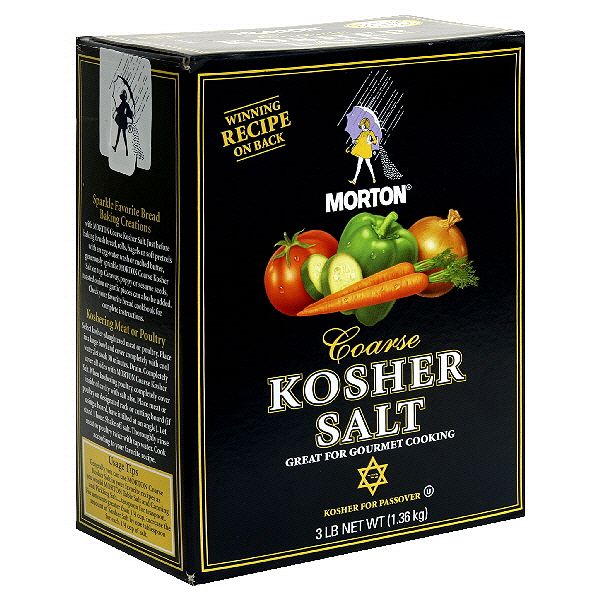
offerings. We also learn that salt
was offered with each of the offerings (one of the symbolic reasons we put salt
on Challah on Friday night before eating it!).


Needless to say, the notion of animal sacrifices as a
mechanism for connecting with God seems a bit out of date when judged by
today’s societal standards. I can’t
really think of a good public place to offer up sacrifices off the top of my
head without feeling a bit self-conscious… Furthermore, the structure was
obviously incredibly hierarchical -- we needed the priests to do things for
us! This hierarchical structure
continued on in a new form after the ancient Temple was destroyed,
with the Rabbis making legal determinations for the people, and later in
synagogues, with Cantors serving as prayer conduits for a largely uneducated
populace.

In many ways, times have changed (which I would argue is for
the better). The power to connect, more
than ever before, rests with the people.
One can go and get a PhD in Talmud and be more textually learned than
one’s rabbi. One doesn’t need a cantor
in order to connect with the Divine, as due to our shifting to a prayer-based
faith, we each have the opportunity to pray whenever we want, in our own words,
creating connections as often as we’d like.
The challenge, however, is that while having the power is
significant and valuable, it admittedly takes more effort and willpower to
exercise it than to simply allow others to serve as conduits on our
behalves. So my challenge to you this
week is to take advantage of the power we’ve been granted. Commit to learning something new, to expressing
gratitude in whatever form speaks to you best, and to acknowledging that while
it may have been awesome to have ancient Bar-B-Qs on a daily basis hosted by
the priests, today we each have the ability to be our own grill masters, and
should seize the opportunity.
Thursday, March 7, 2013
I Have A Very Particular Set Of Skills...
Vayakhel-Pekudai
27 Adar 5773 / March
8-9, 2013
In this week’s double portion of Vayakhel-Pekudei, we find
the Israelites finally constructing all of the various ritual objects to be
housed in the Tabernacle, as well as the Tabernacle itself. We learn that Moses asks “everyone whose
spirit moves him” to contribute gold, silver, etc. to the project, and that
eventually he has to tell the Israelites to stop giving because they had contributed
more than enough to complete the various projects.
A couple of obvious questions.
(1) After hundreds of years of slavery, how did the
Israelites come to acquire such precious materials?
Well if you’ll recall, right before the 10th and
final plague in Egypt (which we read about a few weeks ago), we learn that the
Israelites asked their Egyptian neighbors to “borrow” such valuables, and that
God had a hand in turning the hearts of the Egyptians towards the Jews (as
juxtaposed with hardening Pharaoh’s heart).
Upon leaving Egypt, the Israelites took these valuables, and now in the
wilderness were in a position to contribute them.
(2) Who was in charge of designing these specific ritual
objects and overseeing their construction?
Betzalel ben Uri (the master designer), along with Oholiab
ben Achisamach (we’re taught that they both were endowed with the skill to do
any kind of work). We learn that they
did not build everything by themselves however.
While we know that an overwhelming amount of valuables were contributed
by the people, we also learn that those who were skilled laborers gave of their
skills to help construct everything.
Too often in today’s Jewish community we focus in on those
giving dollars, and neglect the inherit (and significant) value that comes from
those contributing their skills and time.
How and when have you been asked to contribute specific
skills to help your community?
Would your feelings change about Jewish communal
institutions of they asked you to contribute your skills rather than asked you
to contribute dollars?
Have you jumped at the opportunity if and when it has been
presented?
At the end of this week’s portion, we learn that the
Tabernacle and its accompanying sacred objects were completed, due to the
generosity of the Israelites -- both of material wealth and of their time and
skills. Let this important combination
serve as a model for us of what our community can be, how we can include
everyone regardless of means, and how in the end, doing so brings us closer to Divine
service.
Friday, March 1, 2013
Get Up, Stand Up
March 1-2, 2013
In this week’s portion, Ki
Tissa, we find specific instructions on how
to take a census of the nation, we learn that Aaron and his sons (the priests)
are required to wash their hands and feet before making offerings on the altar,
we come upon the episode of the golden
calf, God wanting to destroy the Israelites as a result and Moses speaking
up on their behalf, Moses smashing the
first set of tablets (supposedly
carved by God), 3,000 Israelites slaughtered by the Levite tribe at Moses’s
instruction as punishment, Moses seeing God’s backside,
and Moses going back up the mountain and returning 40 days and nights later with
the second set of tablets. Action
packed!



The prevalent theme running through this portion is the need
to “stand up.”
As it relates to the census, the Israelites had to “stand
up” in order to be counted as part of the nation. Are you ready/willing to stand up and
acknowledge that you ally yourself with the Jewish people?
Aaron and his sons took on leadership roles as it related to
the service of the Divine without being asked if they were willing or
wanting. Are you ready to stand up when
called upon to serve others in ways you may not have been planning on?
Moses stands up to God when God expresses a desire to kill
all of the Israelites due to their creating and worshipping the golden calf. Moses says to God: “If you’re going to take
them all out, you need to take me out too.” Are you ready to stand up and put
yourself on the line for the wellbeing of others?
With Passover only a couple weeks away, what can we do as
individuals and as a community to stand up for those who are still enslaved
around the world, as our ancestors were in Egypt?
There’s no room for passivity. Stand up and make something happen. Report back.
Subscribe to:
Posts (Atom)